
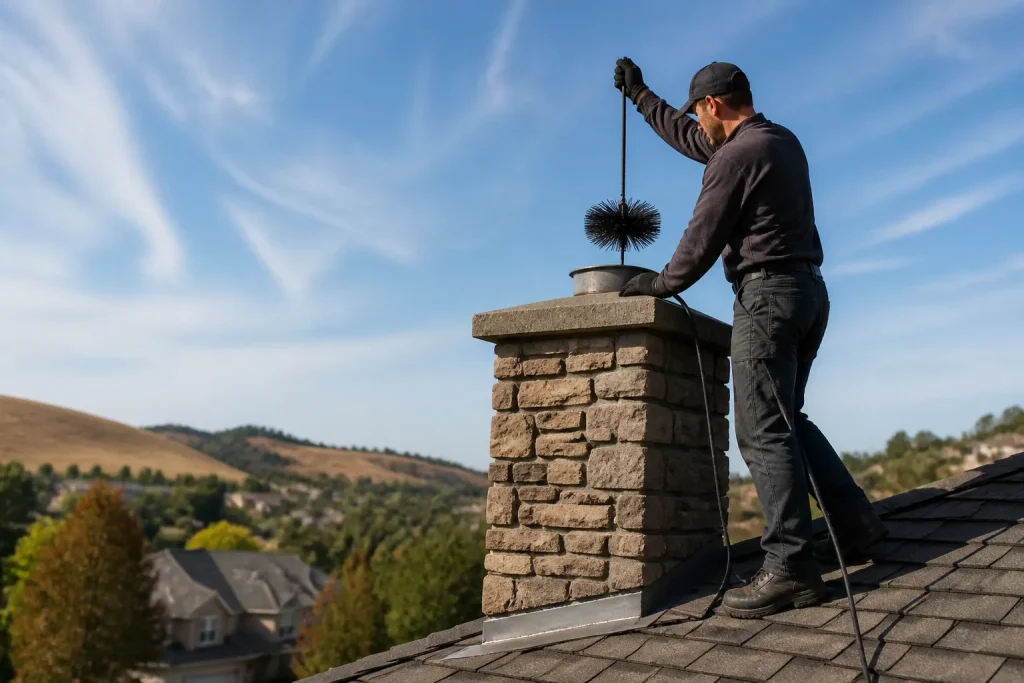
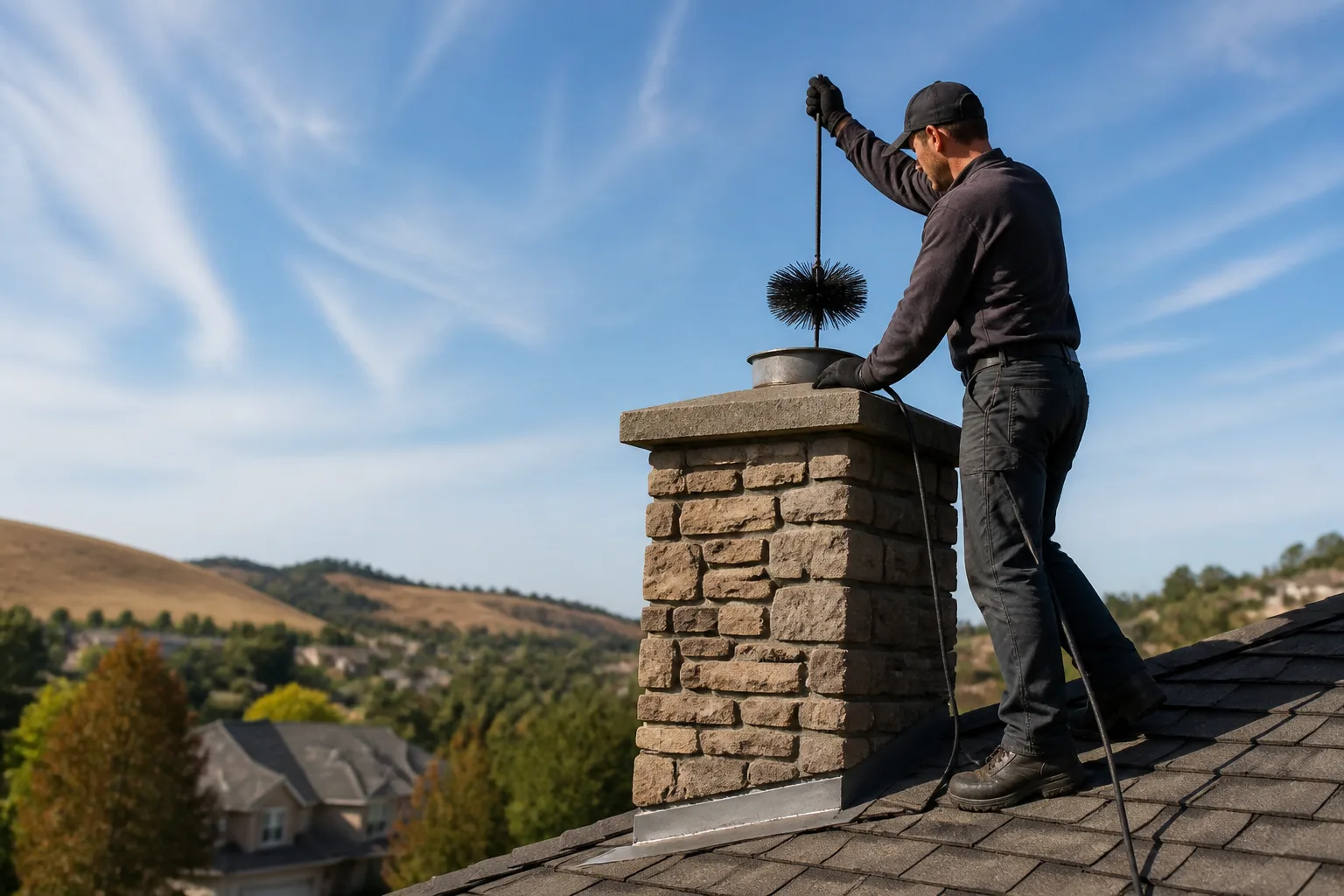
Famco Chimney Sweep in Brentwood: A Homeowner’s Guide
When a sweep tells you your chimney cap needs replacing, the useful question isn’t “how much?” It’s “what are you putting up there?” A stamped sheet-metal throwaway and a Famco commercial-grade unit can carry the same one-line quote, and only one of them is still doing its job a decade from now. Famco makes chimney caps, draft inducers, and make-up air products, and their components turn up on plenty of professional service calls in Brentwood. Knowing what the brand actually builds helps you ask better questions before you approve any replacement part.
If you’d rather have a specialist look at it than climb up there yourself, call (866) 937-7635. We answer 24/7. Fast dispatch from 7am to 7pm, Sunday through Friday.
What does Famco actually manufacture?
Famco builds venting and chimney accessories, not fireplaces or liners. The catalog splits into three groups, and only some of it shows up in residential chimney work around Brentwood.
- Chimney caps. The most common Famco product on a service call. These are multi-wall or single-wall caps with screens, sized to a specific flue dimension. A properly sized cap keeps rain out, keeps animals out, and keeps the draft behaving the way the fireplace was designed to.
- Draft inducers. Mechanical fans that pull exhaust up a flue with a marginal draft. More common on commercial venting and on older masonry chimneys with a short stack.
- Make-up air products. Components that supply combustion air to a tightly sealed house. Relevant when a modern, well-insulated home starves a wood-burning appliance of air and the fire smokes back.
What Famco does not make is a flue liner, a crown, or a damper. If a sweep quotes you a “Famco liner,” that’s a mismatch worth flagging. Liners in Brentwood homes usually come from DuraFlex or get resurfaced with HeatShield, and those are different conversations entirely.
Why do professional sweeps specify Famco over big-box equivalents?
Three reasons, and they’re all things you can verify with your own eyes before the part goes on the roof.
Gauge. A hardware-store cap is often 24-gauge or thinner galvanized steel with a spot-welded screen. Famco’s heavier units use thicker stock and a screen that’s fastened rather than tacked. In a Brentwood summer, a thin cap on a hot flue lid expands, contracts, and works its fasteners loose within a few seasons. Heavier steel doesn’t.
Fitment tolerance. Caps work by sitting snugly over the flue tile with no gap for a squirrel or a bird to exploit. Famco publishes exact dimensions per model, so a sweep can order a cap that fits the actual flue instead of a universal unit shimmed with silicone. Gaps are where animals get in, and an animal in the flue is a smell problem and a blockage problem at once.
Warranty terms. A commercial-grade cap carries a warranty written for the product, not a receipt you lose. Ask to see it. A legitimate supplier relationship means the sweep can hand you the paperwork.
In our experience, the caps that fail early in Brentwood are almost never the ones a specialist specified.
How do you tell a genuine Famco part from a substitute?
You don’t have to take anyone’s word for it. Walk outside and look up, or ask for a photo of the part before it’s installed. Here’s what separates the real thing.
- Stamped identification. Famco caps carry the brand name and model number stamped into the metal or on a fixed label. A handwritten tag or a sticker that peels is not the same thing.
- Measured dimensions. Ask for the flue tile dimensions and the cap’s published size. If the sweep can’t tell you what size went up, the part probably wasn’t specified for your chimney.
- Fastener quality. Stainless or coated screws into a thick flange, not sheet-metal screws biting into a thin lip.
- Documentation. A model number on the invoice and a manufacturer warranty sheet. If it’s a Famco, that paperwork exists.
The honest test is simpler than all four: a specialist who works with a brand regularly will talk about the model, not just the brand. Vague answers about a “heavy-duty cap” are a sign to slow down.
What does a proper Famco cap installation look like?
A cap does two jobs at once, and a sloppy install fails both. It has to exclude animals and weather, and it has to leave the flue breathing correctly.
Done right, the cap sits centered over the flue opening with the screen fully covering the outlet. The flange is fastened down at multiple points, not two, so wind doesn’t pivot the unit off the tile. The gap between the cap and the tile is sealed or toleranced so nothing can squeeze through. And critically, the cap’s outlet area matches the flue’s needs. An oversized cap on a small flue can change how the chimney drafts; an undersized screen clogs with creosote and ash faster and restricts flow.
We see this in Brentwood homes of every age. A cap that’s the wrong size for the flue, or a screen so clogged it’s effectively a lid. Both send smoke back into the room, and neither is fixed by sweeping the flue. They’re fixed by replacing the right component with the right part. That’s the same reason chimney cap & crown work is its own service rather than an afterthought to a sweep.
The crown matters here too. It’s the concrete or masonry surface at the top of the chimney that sheds water away from the flue. A cap that’s correctly sized over a cracked crown still lets water in. Caps and crowns get looked at together because in Brentwood, they fail together.
What should you ask when a cap or vent component is flagged?
Five questions, and any reputable sweep will answer all of them without flinching.
- “What brand and model are you quoting?” If they can’t name it, ask them to.
- “Why this part instead of a cheaper one?” Gauge, fitment, warranty. Those are the three good answers.
- “Can I see the reason in the inspection report?” A cap gets flagged because it’s rusted through, animal-damaged, wrong size, or missing a screen. The report should show which, with a photo.
- “Is the flue itself okay?” A bad cap can mask a flue problem underneath. If the flue is cracked or the liner is deteriorating, a new cap is the smaller half of the job.
- “How will this affect draft?” If your fire has been smoking, the cap change should address it, not just cover the opening.
We work with a curated set of professional-grade brands including Famco, Copperfield, and DuraFlex, so we can talk model numbers rather than vague categories. If you’re already booking a chimney sweep, that’s the right moment to have the cap evaluated in the same visit.
When to call a pro
Chimney work is height work on a roof, and in Brentwood that means ladders, a pitched roofline, and a flue that may still be warm. A cap that looks loose from the ground is a job for someone with the fall protection and the tools to do the install safely. If you suspect a cracked flue liner or a damaged crown, that’s well past a homeowner fix. The component at the top of the chimney is the only thing standing between weather and the inside of your flue, and getting it wrong is a costly lesson.
If the fire has been smoking or the fireplace isn’t drawing the way it should, fireplace repair is where to start, not the cap.
Related services in Brentwood
We do chimney work only, which means inspection, sweeping, cap and crown, fireplace repair, and structural chimney repair all come from the same place. No second contractor, no gap between trades. You can read about the whole scope at Brentwood Chimney Sweep.
The Bottom Line
Famco makes solid, commercial-grade chimney components, and a Famco cap on a properly sized flue is a good investment. What matters is that the part was specified for your chimney, installed by someone with the tools to do it safely, and documented with a model number and a warranty. A stamped throwaway will fit, but it won’t last. A genuine unit installed well will.
Two things worth remembering. First, a cap only performs if the flue and crown under it are sound, so inspect before you replace. Second, if you’re in Brentwood and need help, Brentwood Chimney Sweep offers free estimates and a written price before any work is booked. Call (866) 937-7635. We answer 24/7. Fast dispatch from 7am to 7pm, Sunday through Friday.
Frequently Asked Questions
No. Famco makes caps, draft inducers, and make-up air products, not flue liners. If a sweep quotes you a “Famco liner,” question it. Liners in Brentwood homes typically come from a brand like DuraFlex, and deteriorating flues can sometimes be resurfaced with a HeatShield system instead of a full reline. Either is a bigger job than a cap and should come with inspection evidence.
Ask for the model number and check the stamped identification on the part itself, plus the flue tile dimensions the cap was ordered to fit. A genuine Famco carries the brand name and a model number, comes with warranty paperwork, and is fastened with proper hardware. If none of that can be produced, you’re being sold a substitute, and you can ask for the specified part instead.
Because a cap changes how air moves at the top of the flue. The correct size leaves the flue breathing normally and keeps animals and rain out. A cap that’s too big, too small, or has a screen clogged with creosote restricts flow and can push smoke back into the room. In our experience, that’s one of the most common and most overlooked causes of a smoking fireplace in Brentwood.
We wouldn’t recommend it. Replacing a cap means getting to the top of the chimney, working on a roof with the safety gear to match, and fitting the part correctly to the flue tile. A loose cap or a wrong-sized one soon lets water and animals in, and a fall is a much worse outcome than a routine service call. Have a specialist handle the roof work. Call (866) 937-7635 for a free estimate.
Written by the team at Brentwood Chimney Sweep.
Need Chimney Cleaning Help?
Call Brentwood Chimney Sweep - the local pro we connect you with is licensed and insured, with free written estimates in Brentwood.
(866) 937-7635